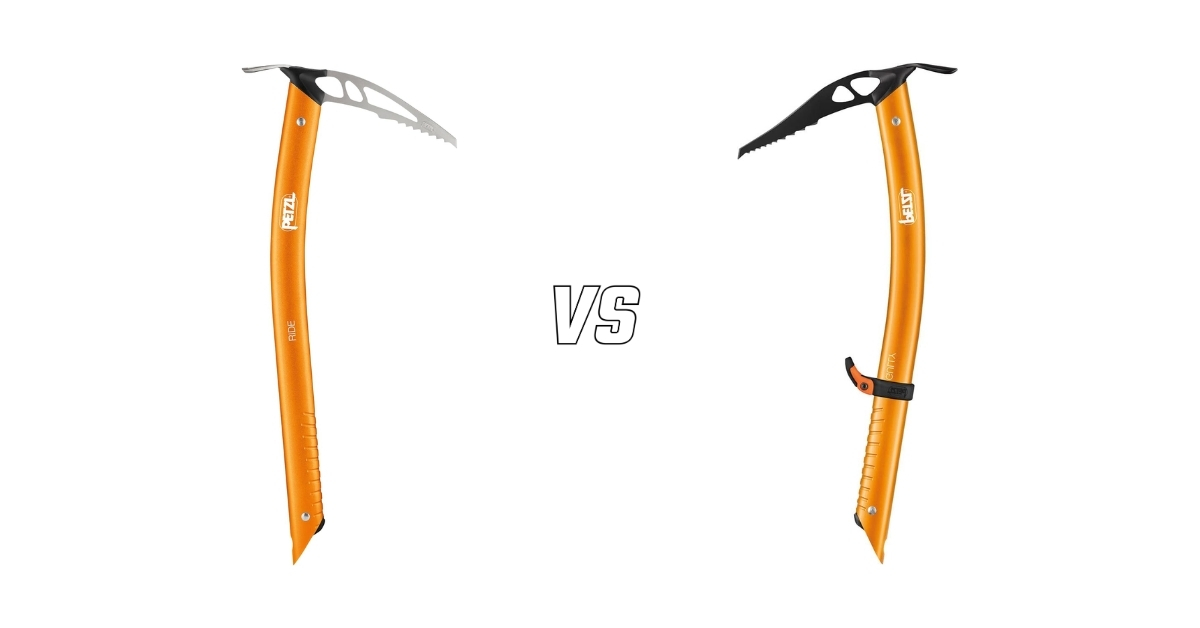
Petzl only makes two axes under 300 grams, and they look almost identical hanging on a gear wall. Same 45cm length, same curved aluminum shaft, same skeletal steel head design. Pick one up without checking the label and you could genuinely mix them up. But the Ride and the Gully are built for different jobs, and the gap between them shows up the moment you’re above 45 degrees on firm snow or trying to stick a pick into anything resembling ice. This guide breaks down exactly where they diverge, what the spec sheets don’t tell you, and which one actually belongs in your kit based on the terrain you’re climbing.
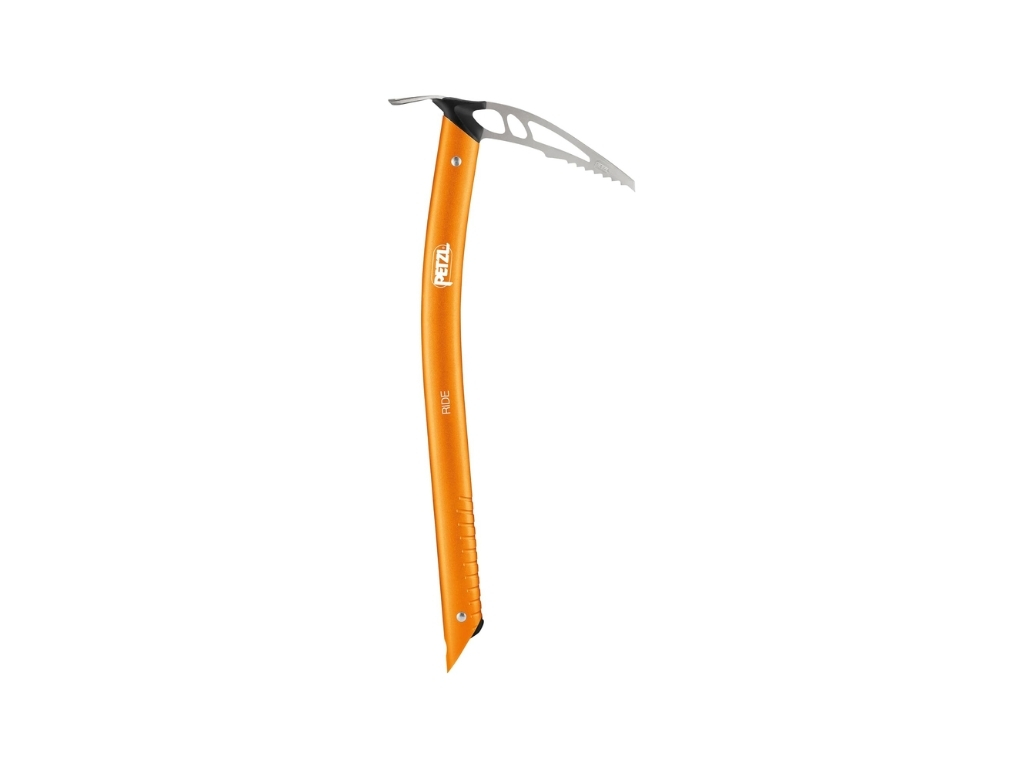

Get the Petzl Ride if your season is mostly ski mountaineering, glacier travel, and alpine rock approaches where the axe rides in your pack more than it’s in your hand. It’s the lighter, cheaper, more natural self-arrest tool of the two.
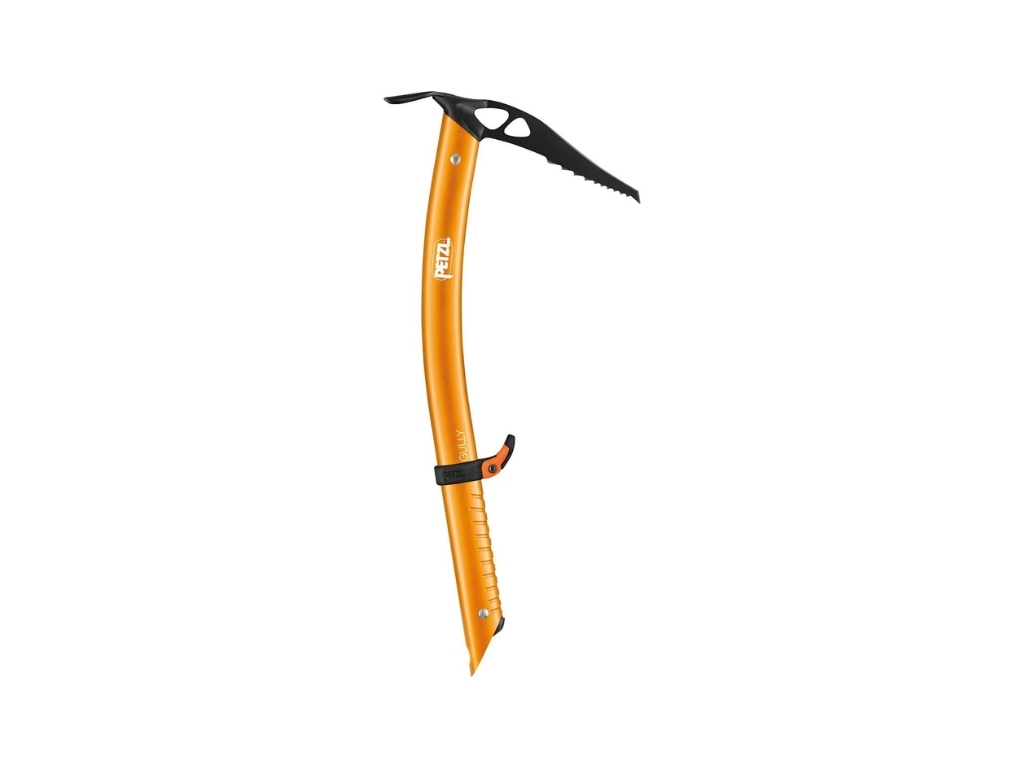
Get the Petzl Gully if you’re regularly climbing steep snow couloirs, moderate water ice, or want a second tool to pair with a Quark or Nomic for technical alpine routes. The Trigrest and more aggressive pick earn their weight penalty on anything steeper than a boot-pack.
| Feature | Petzl Ride | Petzl Gully |
|---|---|---|
| Weight | 240g (8.4 oz) | 280g (9.8 oz) |
| Length | 45cm only | 45cm only |
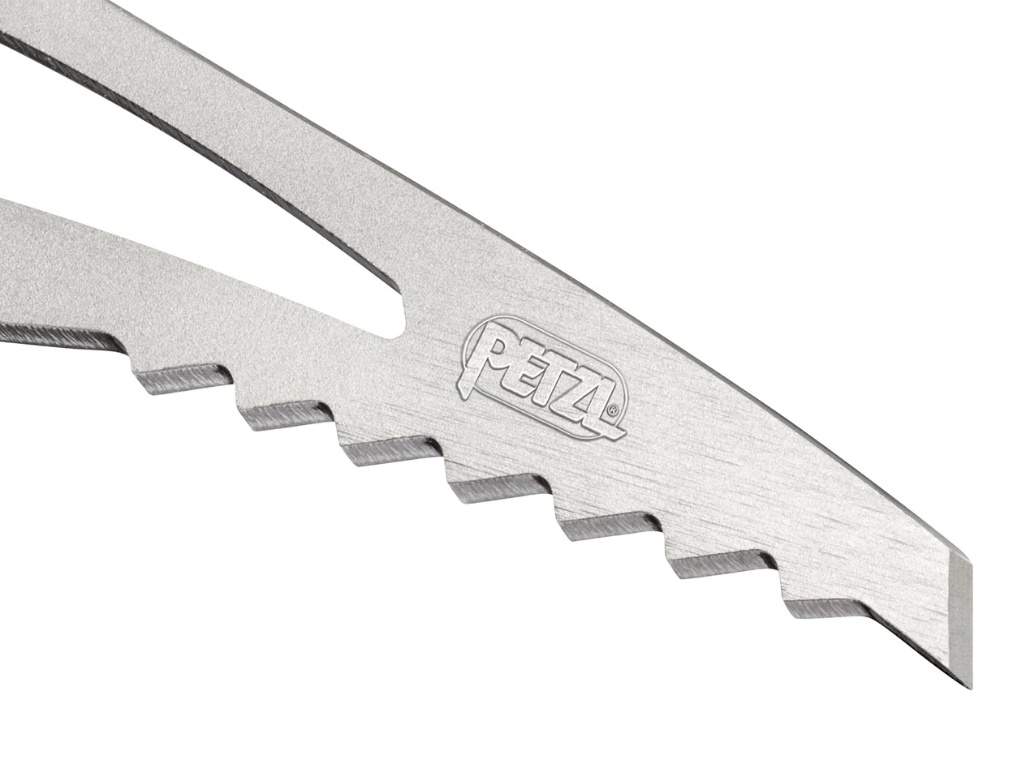
| Pick | Tempered steel, positive curve | Forged steel, slight reverse curve, tapers to 3mm |
| Hammer option | No | Yes (or adze) |
| Trigrest (adjustable hand rest) | No | Yes |
| Rating | CEN-B | CEN-B (pick and shaft UIAA Type 1) |
| Best for | Ski mountaineering, glacier travel, alpine rock approach | Steep snow, moderate ice, technical alpine routes |
Where It Makes Sense
The Ride
The Ride is the axe you bring when you’re not sure you’ll need an axe at all. It disappears inside a ski touring pack, it’s the lightest tool Petzl makes with a full steel head, and it self-arrests better than almost anything in its weight class. Think spring couloir descents on skis, glacier approaches to alpine rock routes, or early-season scrambling where you want insurance without the weight tax.
If your season looks like the North Cascades in June, the Wasatch backcountry, or classic volcano routes, the Ride covers it.
The Gully
The Gully was born because Ueli Steck wanted an axe light enough to carry on technical objectives without giving up pick performance. It shows. This is the axe for steep snow couloirs pushing 50-60+ degrees, moderate water ice up to WI3 (WI4 with careful technique), and anyone who wants to pair a lightweight tool with a more technical ice tool for a “one and a half axe” setup.
Climbers who eventually replace a Sum’Tec or a Black Diamond Raven with the Gully tend to do it because the Gully climbs closer to a real ice tool than its weight suggests, not because it’s the lighter option.
Feel & Handling
This is where the two axes stop being twins. They share an identical curved aluminum shaft, so the base handling in your hand is the same. Everything else changes at the head.
The Ride’s positive curve pick is tuned for daggering and self-arrest. It bites cleanly into firm snow, and the shaft’s slight bend gives you extra leverage in low and mid-dagger positions. What it isn’t built for is aggressive swinging. Petzl didn’t design the Ride to be swung overhead like an ice tool, though testers at OutdoorGearLab noted they ended up doing exactly that more often than expected, simply because the axe is light enough to get away with it.
The Gully feels different the moment you swing it. The reverse-curve pick tapers down to 3mm, the same width as Petzl’s dedicated ice climbing picks, and it’s genuinely built to be swung, not just planted. The tradeoff is self-arrest: the reverse curve makes the arrest motion a bit choppier on firm snow compared to the Ride’s smoother positive curve. It’s still usable, just not as intuitive if self-arrest is your primary use case.
The Trigrest is the other big handling difference. It’s a slider hand rest that moves anywhere along the Gully’s shaft without tools, and it changes how secure the tool feels in nearly every position, from low-daggering on 40-50 degree snow to full overhead swings when the pommel is slid to the base of the shaft. The Ride has no equivalent. You can retrofit a Petzl Trigrest onto a Ride shaft separately since the shafts are compatible, but it doesn’t come standard, and most Ride buyers never bother.
Design & Build
Both axes share a curved 7075 aluminum shaft with a spikeless design: instead of a traditional steel spike, the shaft is cut at an angle and plugged with plastic to keep snow out. It saves weight but means neither tool plunges as cleanly or durably as a straight-shafted axe with a real spike, and the cut edge can pick up small burrs if you brace it against rock repeatedly.
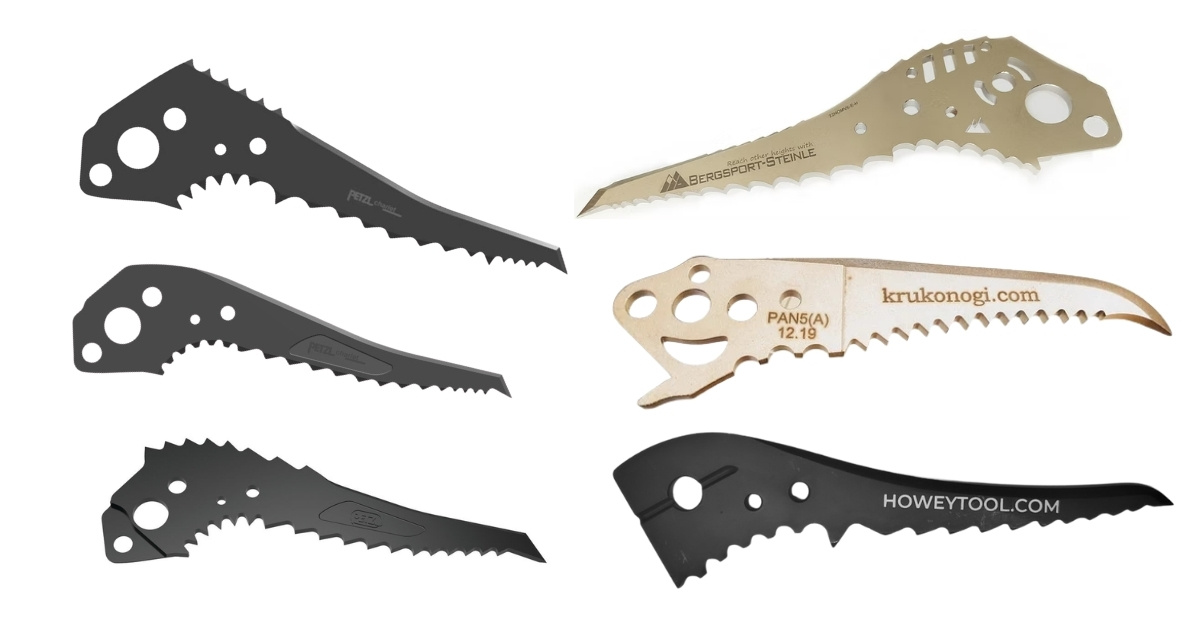
Neither the Ride’s nor the Gully’s pick is replaceable, which is worth flagging if you’re used to Petzl’s modular ice tool lineup. The Nomic, Quark, and Sum’Tec all share a head system that lets you swap picks when they wear out. The Ride and Gully don’t. When the pick dulls past the point of sharpening, you’re replacing the whole head assembly, not just a pick. It’s a fair tradeoff for the weight savings, but it’s the kind of detail that only shows up after a season of use, and most competitor reviews skip it entirely. If you want the full picture on Petzl’s pick ecosystem, our replacement picks guide covers what’s swappable across the lineup and what isn’t.
Petzl also updated the Gully for the 2026/27 season: a brighter orange colorway, additional holes machined into the pick for further weight savings, and a reshaped head that plungers found easier to handle vertically. If you’re comparing older reviews of the Gully against current retail listings, this is why some spec numbers (and the look of the tool) shift slightly between older photos and what ships today.
Read more, check this PETZL Gully review or interested to read the additional details on Amazon
Strengths
Petzl Ride
- Lightest axe Petzl makes with a full steel pick and adze
- Best-in-class self-arrest smoothness for anything under 12 ounces
- Noticeably cheaper, less than the Gully depending on retailer
- Comfortable to carry for hours in both pick-forward and pick-back positions
- Versatile enough for basic glacier travel and moderate mountaineering, not just ski touring
Petzl Gully
- Climbs steep snow and moderate water ice meaningfully better than any axe near its weight
- Trigrest adds real security across a wide range of hand positions
- Available with a hammer, useful for placing pickets or resetting protection
- Compact enough to disappear inside a pack, same as the Ride, but with more technical capability once it’s out
- Holds up as a genuine second tool alongside a Quark or similar technical ice tool
Limitations
Petzl Ride
- No real spike, so vertical plunging is less secure than a traditional straight-shafted axe
- Only comes in one length (45cm)
- Adze is undersized and not built for serious digging or step-chopping
- No Trigrest, so steeper terrain feels less secure without an aftermarket addition
Petzl Gully
- Self-arrest is less smooth than the Ride, especially on firm snow, due to the reverse-curve pick
- Costs meaningfully more for a tool most people will pair with something else rather than use alone
- Not a true all-arounder. Reviewers consistently note it isn’t the only axe you’ll own
- Same undersized adze issue as the Ride, and the hammer is small enough that heavy piton or picket work takes longer
Comparison Context
The Ride and Gully aren’t really competing with each other so much as splitting one category by intent. If you’re cross-shopping either against heavier options, here’s how the field breaks down:
Against the CAMP Corsa (7.2 oz, fully aluminum head), the Ride is heavier but far more capable on firm snow and ice thanks to its steel head. The Corsa saves weight but sacrifices real climbing performance.
Against the Petzl Sum’Tec (roughly 450-470g depending on length), the Gully gives up some swing weight and pick aggression but saves nearly 200 grams per tool. Climbers moving from a Sum’Tec to a Gully setup usually do it for weight, not performance, and accept a slightly less punchy swing in exchange. For a full breakdown of that tradeoff, see our Petzl Gully vs Sum’Tec comparison.
Against the Black Diamond Venom (about 514g), the Gully climbs comparably on steep snow and moderate ice despite weighing nearly half as much, according to independent lab testing. The Venom pulls ahead on sustained technical ice and durability, but for ski mountaineering objectives, the weight difference is hard to ignore.
If you’re building out a broader lightweight kit rather than deciding between these two specifically, our guide to the best lightweight ice axes for ski mountaineering covers where both of these fit against the rest of the field, and our technical ice tools for alpine ice guide is the next step up if you find yourself outgrowing the Gully on sustained water ice.
Final Recommendation
If you had to own just one of these two, the decision comes down to what scares you more: an unsecured self-arrest on firm snow, or a pick that won’t bite when things get steep. The Ride wins the first scenario. The Gully wins the second.
For most ski mountaineers and alpine climbers building a fast-and-light kit, the Ride is the more practical single-axe choice, it’s lighter, cheaper, and covers a wider range of moderate terrain without feeling out of its depth. The Gully earns its place once your objectives regularly push into steep couloirs or moderate ice, at which point it stops being a luxury and starts being the tool that actually gets you up the route.
Compare pricing and availability for the Petzl Ride and the Petzl Gully before you decide, and if you already own a Gully and want the deep dive on the hammer version specifically, our full Petzl Gully Ice Axe Hammer review covers long-term field use in more detail.
Frequently Asked Questions
They share a shaft, not a purpose. The pick geometry, the Trigrest, and the hammer option make the Gully meaningfully more capable on steep terrain. The 40-gram difference is small; the performance gap on 50+ degree snow and moderate ice is not.
Yes, the shafts are compatible and Petzl sells the Trigrest separately. It closes part of the gap in steep terrain but doesn’t change the pick geometry, so the Gully still climbs firm ice noticeably better. If your main complaint about the Ride is hand security rather than pick performance, the aftermarket Trigrest is a reasonable middle ground.
Both axes only come in one length, and taller climbers sometimes worry about this upfront. In practice, on steep terrain the slope itself is close to your body, so a shorter shaft isn’t the handicap it would be on low-angle glacier walking. If your objectives are mostly steep couloirs and technical approaches rather than flat glacier travel, length matters less than you’d expect.
If you’re climbing steep snow, moderate ice, or want a real second tool for technical routes, yes. If your season is mostly ski touring and glacier approaches where the axe rarely leaves your pack, the Ride does the job for less money and less weight.
The Ride is the better of the two for this. It self-arrests more predictably and is more comfortable to carry for long stretches. The Gully is a specialist tool. Most climbers pair it with something else rather than relying on it alone for general mountaineering.