
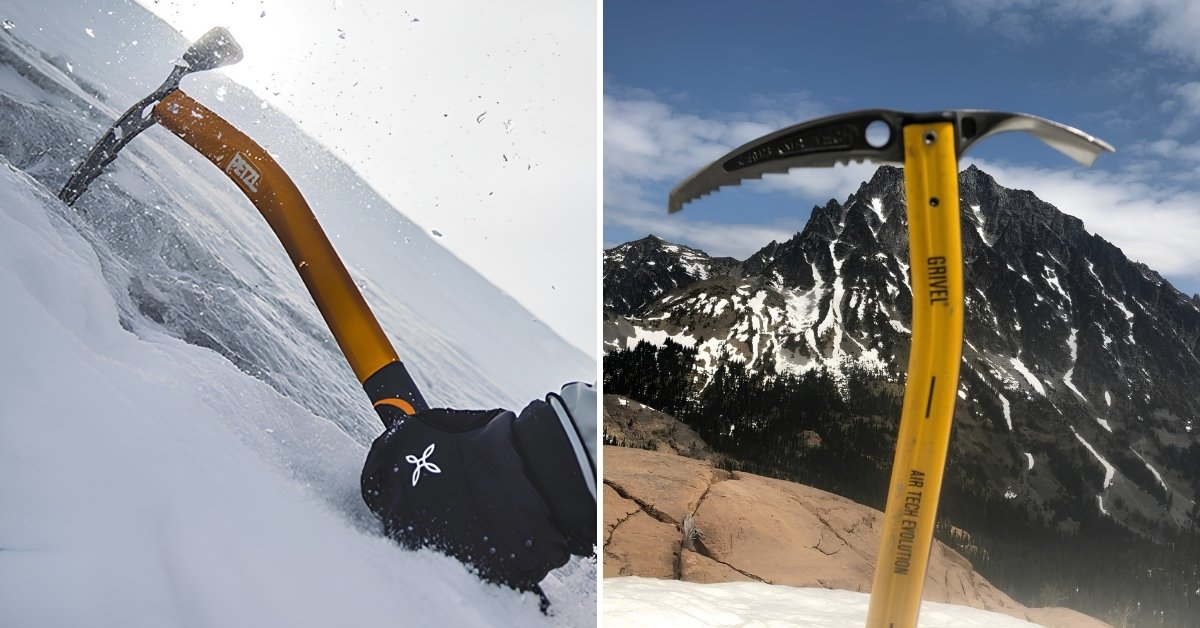
It is an in depth Ice Axe showdown for the modern mountaineer. In the high stakes world of alpine climbing and mountaineering, your ice axe is more than a tool, it’s an extension of your body, a lifeline on steep slopes, and a critical decision point in your gear selection. For climbers navigating glacial approaches, steep snow couloirs, or technical alpine ridges, the choice between two of the market’s most respected general mountaineering axes, the Grivel Air Tech Evo and the Petzl Summit Evo, can be a daunting one.
Historical Fact
Both axes hail from legendary manufacturers with centuries of combined heritage. Grivel, founded in Italy in 1818, brings traditional craftsmanship and innovative metalwork. Petzl, born from French caving in the 1970s, revolutionized vertical sports with engineering precision.
The Air Tech Evo and Summit Evo represent the current pinnacle of their “classic mountaineering axe” categories, designed for versatility, reliability, and performance across a wide range of conditions.
Here you dives deep into every facet of these iconic tools. Whether you’re a seasoned alpinist eyeing an upgrade or an aspiring mountaineer building your first rack, we’ll dissect materials, geometry, handling, and real world performance to help you determine which axe belongs on your harness.
Before diving into nuanced performance, let’s establish the technical groundwork.
| Feature | Grivel Air Tech Evo | Petzl Summit Evo |
| Primary Use | General mountaineering, glacial travel, alpine climbing | General mountaineering, ski touring, alpine routes |
| Lengths Available | 50cm, 55cm, 60cm, 65cm, 70cm | 50cm, 55cm, 60cm, 65cm, 70cm |
| Head Material | HM90 high grade steel (pick & adze) | 7075 aluminum shaft with steel pick insert |
| Shaft Material | 7075 T6 aluminum alloy | 7075 T6 aluminum alloy |
| Shaft Geometry | Asymmetric “Air Tech” oval profile | Symmetric “T” profile with reinforced spine |
| Pick Type | Modular, replaceable Laser pick (aggressive teeth) | Modular, replaceable Technology pick (moderate teeth) |
| Adze Type | Rounded, sculpted “Air Tech” adze | Classic, slightly curved polycarbonate adze |
| Weight (approx., 60cm) | 535g | 510g |
| Grip | Extended rubber grip with molded finger rest | Polyamide upper grip, rubber lower grip |
| Spike | Asymmetric, aggressively tapered steel | Symmetric, conical steel |
| Certifications | UIAA 152, EN 13089:2011 | UIAA 152, EN 13089:2011 |
| Price | See the best price | See the best price |
At first glance, the specs appear similar, but the devil, and the divinity, is in the details.
Design Philosophy & Construction
Grivel Air Tech Evo: The Italian Precision Instrument

Grivel’s “Air Tech” naming isn’t just marketing, it refers to the proprietary forging process and the distinctive oval shaft profile. The shaft is asymmetrical, with a flattened, broader side on the plane of the pick and a narrower profile perpendicular to it. This design aims to provide optimal stiffness during a plunge or piolet traction while reducing weight and improving airflow in swing (a subtle but appreciated feature on high speed swings).

The head is a masterpiece of focused engineering. Constructed from a single piece of HM90 steel (a chrome molybdenum variant known for toughness and edge retention), it feels indestructible. The pick employs Grivel’s “Laser” tooth pattern, sharper, more aggressive teeth designed to bite decisively into hard ice and névé. The adze is uniquely sculpted, with a pronounced curve and “winged” sides that make snow clearing and step cutting surprisingly efficient for its size. The transition from shaft to head is seamless, with a strong forged collar that inspires confidence.

Petzl Summit Evo: The Refined French All Rounder
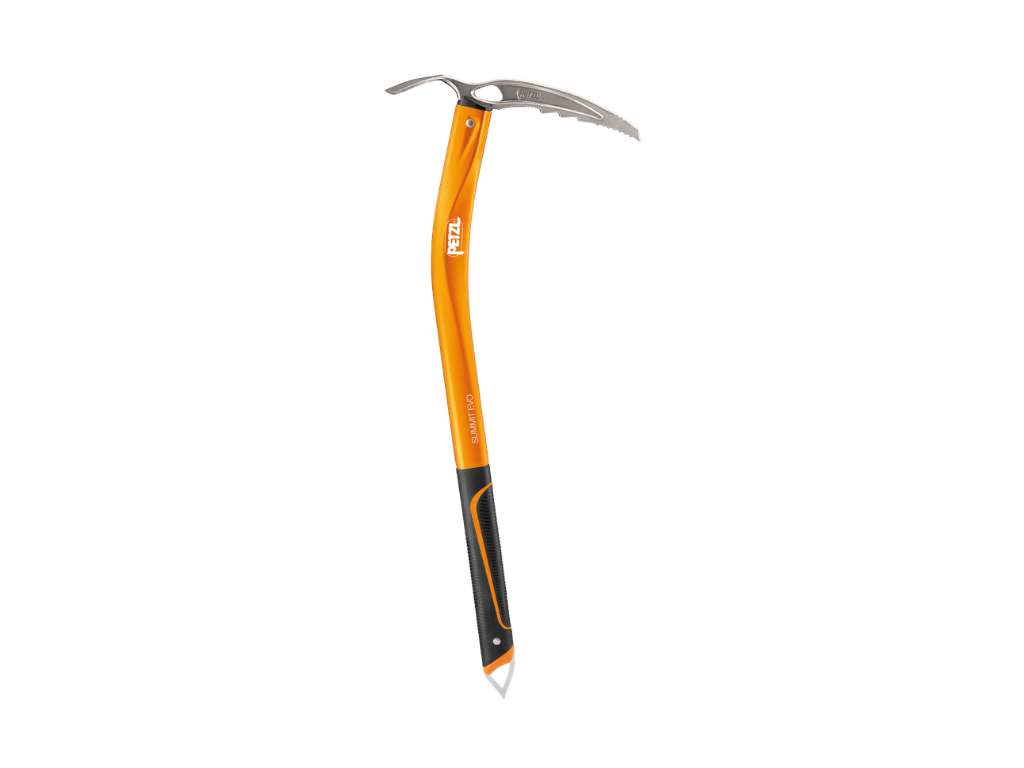
Petzl approaches the Summit Evo with a philosophy of balanced versatility. The shaft features their classic “T” profile, a symmetrical shape with a reinforced spine running its length. This provides uniform flex and strength in all directions, which many find more predictable, especially when using the axe as a cane or for low dagger placements.


The head construction is a hybrid marvel. The shaft is 7075 aluminum, but it integrates a forged steel insert where the pick attaches. This “best of both worlds” approach lightens the swing weight while maintaining a durable bite point. The pick is Petzl’s “Technology” style, a slightly curved profile with broader, more rounded teeth. It’s designed for a secure bite in a variety of snow and ice types without being overly aggressive on rock or snagging on gear. The adze is polycarbonate, a weight saving choice that’s perfectly adequate for snow tasks but less durable for chopping hard ice or frozen turf.
Performance on the Mountain: Where Theory Meets Ice
Self Arrest and Snow Plunging
Grivel Air Tech Evo: The asymmetric shaft truly shines here. During a self arrest, the flattened plane naturally orients the pick toward the slope with minimal wrist adjustment. The aggressive pick digs in with authority, especially on hard, icy snow. The steel spike is slightly offset, which some testers noted helps it penetrate more cleanly without deflecting. The extended rubber grip provides excellent control and leverage when rolling into an arrest position. The weight, though slightly higher, adds to the “plant and stick” feeling that many climbers trust with their lives.
Petzl Summit Evo: The symmetrical shaft requires a more conscious wrist rotation to ensure the pick is properly oriented during an arrest, a minor but notable point for beginners. The bite is secure but feels slightly less immediate on bulletproof ice than the Grivel’s. Where it excels is in softer snow and variable conditions; the pick is less prone to over penetrate and jerk the shaft. The spike’s conical shape plunges beautifully in all snow types. The weight savings are noticeable during long carries and repeated plunges on a 40 degree névé slope.
Want to know more about picks? checkout PETZL replacement picks
Technical Climbing and Steep Terrain
When the angle steepens and you transition to using the axe in piolet traction or for dagger placements, differences magnify.
- Grivel Air Tech Evo is a climber’s axe. The Laser pick hooks over rock edges and punches into thin ice with a positive thwack. The curved adze is superb for hooking and for clearing rotten ice. The handle’s molded finger rest provides a secure grip for high dagger placements. The stiffness of the asymmetric shaft translates directly to the head, giving precise feedback. However, that stiffness can transmit more shock to the arm on marginal placements in brittle ice.
- Petzl Summit Evo feels more forgiving and fluid. The slightly curved pick sinks smoothly into medium consistency ice and snow. The hybrid head dampens vibration effectively. For climbers who move quickly over mixed terrain of snow, ice, and rock, the pick’s less aggressive teeth are less likely to get stuck or damaged. The polycarbonate adze is a liability if you’re doing serious chopping, but for most alpine climbs, it’s sufficient for cleaning holds.
Longevity, Maintenance, and Modularity
Both axes feature modular, replaceable picks, a critical modern feature.
Grivel’s system using two large bolts. Pick replacement is straightforward, and the HM90 steel holds an edge exceptionally well, resisting abrasion from rock contact. The all steel head is virtually impervious to corrosion and impact damage. The downside? The steel can develop surface rust if not dried, and the aggressive teeth can be harder to sharpen in the field without a dedicated file.
Petzl’s system uses a clever captive pin and screw mechanism, allowing tool less pick removal in the field (with a coin or carabiner). This is a huge advantage for expedition use. The steel insert protects the aluminum head, but the aluminum shaft is more susceptible to cosmetic damage and deep gouges than steel. The pick’s softer teeth are easier to touch up on a rock or with a file, but they may require more frequent attention.
Ergonomics and the “Feel” Factor
This is the most subjective, yet crucial, category.
The Grivel Air Tech Evo feels like a precision tool. It’s confident, direct, and slightly front heavy, which aids in swing placement. The rubber grip is exceptionally comfortable, even without gloves. Climbers with larger hands appreciate the defined finger rest. It demands active, engaged technique, rewarding good form with stellar performance.
The Petzl Summit Evo feels like an extension of your arm. It’s balanced, smooth, and intuitive. The grip transition is seamless, and the lighter swing weight reduces fatigue over a long day. It’s perhaps the more “friendly” axe, forgiving of less than perfect technique and adaptable to a wider range of casual grips.
Which Climber is Each Axe For?
Choose the Grivel Air Tech Evo if your mountaineering leans toward technical alpine climbing and steep ice gullies. The aggressive pick and solid build inspire confidence when the terrain gets serious.
You frequently encounter hard, icy conditions where immediate, positive penetration is non negotiable. You prioritize durability and “bomb proof” construction over shaving grams.
You don’t mind a little extra weight for a tool that feels unbreakable.
You have a precise, aggressive climbing style and value direct feedback from your tools.
Choose the Petzl Summit Evo if your primary use is glacial travel, ski mountaineering, and classic alpine routes where a versatile, lightweight performer is key.
You value field maintenance and modularity. The tool less pick change is a brilliant feature for long trips.
You prefer a balanced, forgiving tool that performs well across snow, ice, and rock without excelling aggressively in any single medium.
Weight savings is a significant factor in your gear strategy for long approaches and high altitude climbs.
Final Thoughts & Pro Tip
There is no “loser” in this comparison, only two exceptional tools optimized for slightly different visions of the mountain experience.
The Grivel Air Tech Evo is the specialist’s choice: a rugged, responsive ice axe for those who seek out steep and challenging conditions.
The Petzl Summit Evo is the consummate all rounder: a lightweight, intelligent design for the climber who values efficiency and adaptability across diverse terrain.
Pro Tip from MaxMountaineer: Before you decide, if possible, borrow or rent both models. Perform the most telling test: on a safe, steep snow slope, practice a series of self arrests from various positions. Then, find a patch of water ice or hard névé and make a series of overhead placements. Your body and your instincts will often tell you more than any review can. The right ice axe isn’t just about specs, it’s about the partnership it forms with you on the mountain.
Frequently Asked Questions
While both are “general mountaineering” axes, the Grivel Air Tech Evo has a slight edge for steep ice. Its aggressive “Laser” pick and stiffer asymmetric shaft provide a more secure “thunk” and better bite in hard, frozen conditions compared to the Petzl.
Yes, but the Petzl Summit Evo wins for convenience. It features a tool-less system you can operate with a coin or carabiner. The Grivel requires a specific hex key, which is harder to manage with cold fingers or on a windy ridge.
The Petzl Summit Evo is the winner for weight-conscious climbers. At roughly 510g (for the 60cm model), it is lighter and more balanced, making it less of a burden when strapped to your pack for miles.
The Grivel Air Tech Evo often includes the Long Leash, which features a built-in rubber protector for the spike. The Petzl Summit Evo usually does not come with a leash, as many modern climbers prefer to buy a “leashless” spring umbilical or a specific Petzl Linkin leash separately.
For general mountaineering, hold the axe by the head at your side; the spike should reach your ankle bone. If you plan on doing more technical, steep climbing, many athletes prefer a shorter 50cm or 55cm length for better clearance and swing.
