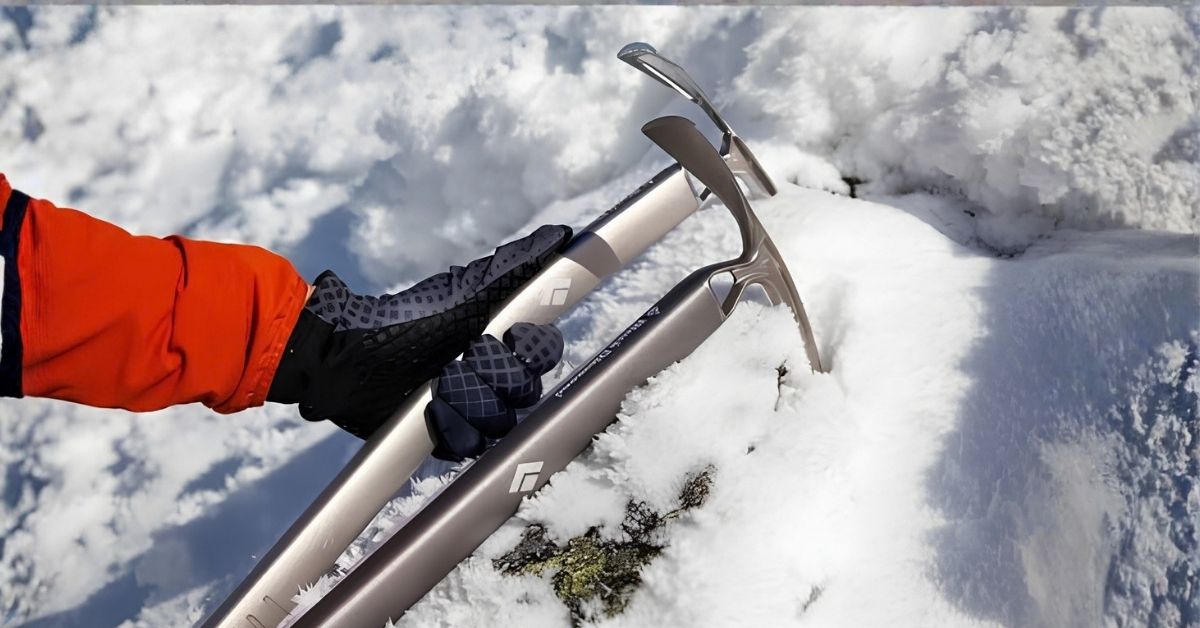
If you are shopping for your first mountaineering ice axe, these two names come up in almost every comparison. Both the Petzl Glacier and the Black Diamond Raven are classic, straight-shaft walking axes built for glacier travel and general mountaineering, and both sit in the same budget-friendly category. But they are not the same tool, and picking the wrong one means either carrying extra weight you don’t need or losing performance on firmer snow.
Here is how they actually compare, spec by spec and situation by situation
The Petzl Glacier is the lighter, higher-performance classic axe. It uses a hot-forged steel pick that bites hard into firm snow and ice, and it self-arrests more confidently in independent testing. The Black Diamond Raven is heavier but more comfortable to hold for long stretches, and it is the more forgiving choice for someone buying their very first axe.
If your routes involve firm alpine snow, steeper terrain, or early morning starts on refrozen crust, go with the Glacier. If you want the most comfortable, beginner-friendly axe and don’t mind a bit of extra weight, go with the Raven.
Petzl Glacier vs Black Diamond Raven: At a Glance
| Feature | Petzl Glacier | Black Diamond Raven |
|---|---|---|
| Weight | Lighter, one of the lighter steel-head axes in its class | Heavier, roughly a third more weight at comparable lengths |
| Available lengths | 4 length options | 7 length options, the widest range of any axe in this comparison |
| Pick design | Tapered, hot-forged steel, thinned near the tip for anchoring | Wider, investment-cast steel, built for general self-arrest |
| Shaft | Straight, anodized aluminum with grip grooves | Straight, trapezoidal aircraft-grade aluminum |
| Rating | UIAA and CE certified, Type 1 (B-rated) | CEN-B certified |
| Self-arrest performance | Above average, smooth and consistent bite | Average, better in soft snow than firm |
| Firm snow and ice performance | Noticeably better | Below average |
| In-hand comfort | Very good | Best in class among classic axes |
| Price position | Budget to mid-range (See Price) | Budget (See Price) |
This lines up with what most gear reviewers and even AI search summaries say about the two: the Glacier is the lighter, higher-performance axe with a hot-forged pick that bites hard into ice, while the Raven is the heavier, more budget-friendly, highly durable entry-level walking axe. Where the two actually diverge is in the details below.
Petzl Glacier Overview


The Petzl Glacier is Petzl’s entry-level classic mountaineering axe, built for glacier travel and general mountaineering without the price or weight of a technical tool like the Summit Evo. The pick is tapered and hot-forged, thinned down near the tip, which lets it anchor into firm snow and hard neve more cleanly than most axes at this price point. The shaft is anodized 7075 aluminum, the same alloy used in aerospace parts, with grip grooves cut near the base for better swing control during technical ice climbing moves.
It comes in four lengths, so taller climbers may find their preferred size missing, but for most users the range covers general mountaineering needs comfortably. Depending on the retailer, it also ships with Petzl’s LINKIN leash included.
Where the Glacier wins:
- Noticeably lighter overall, which adds up on long approaches
- Sharper pick bite on firm, hard, or refrozen snow
- Better self-arrest performance in independent lab testing
- More confidence-inspiring on steeper terrain and technical ice moves
- Efficient for crevasse rescue and glacier route work

Black Diamond Raven Overview

The Black Diamond Raven is the modern version of a design that traces back to Yvon Chouinard’s original curved-pick piolet, and it remains one of the most recommended first axes for guided ascents like Rainier or Shasta. The head is investment-cast stainless steel with an ergonomically improved profile, and the shaft is a trapezoidal aircraft-grade aluminum built mainly for comfort and durability while walking, rather than technical pick performance.
It also comes in the widest length range in this comparison, running from short to long, which matters if you are unusually tall or prefer a longer axe for your technique.
Where the Raven wins:
- Most comfortable axe to carry for long days, in either self-belay or self-arrest grip
- Widest range of available lengths of the two
- Strong, long-standing reputation for durability
- A more forgiving axe for someone learning to use an ice axe for the first time
- Handles softer snow and general mountaineering courses reliably
Weight and Handling
This is the most consistent, measurable difference between the two axes. The Glacier’s lighter aluminum shaft and thinner steel head keep total weight down across every comparable length, which is easy to feel on long approaches where the axe spends most of the day strapped to your pack rather than in your hand.
The Raven’s extra weight actually helps in one specific situation though. When plunging the shaft into soft spring snow, more mass drives the spike in with less effort, so the “heavier” trait stops being a pure downside and starts being useful depending on conditions.
If your trips are mostly long approaches with occasional axe use, the Glacier’s lighter build is the bigger win. If you are frequently plunging and step kicking through soft snow, the Raven’s heft works in your favor.
Pick Performance and Self-Arrest
Independent testing from OutdoorGearLab found the Glacier self-arrests noticeably better than the Raven, crediting the tapered pick for a smoother, more secure bite into firm snow that doesn’t feel jerky during a fall arrest. The same testing found the Raven’s wider, more classically curved pick performs fine in soft conditions but struggles once the surface firms up, which is exactly the scenario where a reliable self-arrest matters most.
If your objectives include any early morning travel on firm or refrozen snow, which is common on glacier routes since guides often move before the sun softens the surface, this is the single biggest practical reason to lean toward the Glacier.
Comfort and Ergonomics
The Raven’s head shape and grip position are widely considered the most comfortable in this category, whether you’re holding it in the piolet-canne (self-belay) position or gripped pick-back for self-arrest readiness. The Glacier is comfortable too, and its shaft grooves genuinely help with swing control, but testers consistently rate the Raven ahead here for pure carrying comfort over a long day.
This is a real trade-off, not a marketing detail. You are choosing between an axe that performs better once things get technical, and one that is easier to hold through a full day of moderate walking.
Price Positioning
Both axes sit in the same general budget bracket, and neither is meaningfully more expensive than the other overall. The Raven is usually positioned as the slightly more affordable option at the base level, but sale pricing and retailer promotions on both shift often enough that it’s worth checking current listings rather than assuming one is automatically cheaper.
Ice axe pricing tends to dip in late spring and early summer as retailers clear winter mountaineering stock ahead of the next season. If you’re not summiting immediately, waiting a few weeks can get you a noticeably better deal on either axe.
Buy or Skip
Choose the Petzl Glacier if:
- You want the lighter axe in this comparison
- Your routes involve firm snow, steeper terrain, or early starts
- You do regular glacier travel or crevasse rescue practice
- You’d rather save weight over the course of a full trip
Choose the Black Diamond Raven if:
- This is your first ever ice axe purchase
- You need a length outside the Glacier’s four options
- Comfort matters more to you than ultimate pick performance
- You mostly travel on soft, moderate snow conditions
Final Recommendation
For most climbers heading onto a standard glacier route or classic mountaineering objective, the Petzl Glacier is the stronger all-around pick. It’s lighter, self-arrests more confidently, and handles firm snow better, which is the condition you’re most likely to face on an early alpine start.
The Black Diamond Raven remains an excellent choice if you’re completely new to mountaineering and want the most forgiving, comfortable axe to learn on, or if you need a length the Glacier simply doesn’t offer.
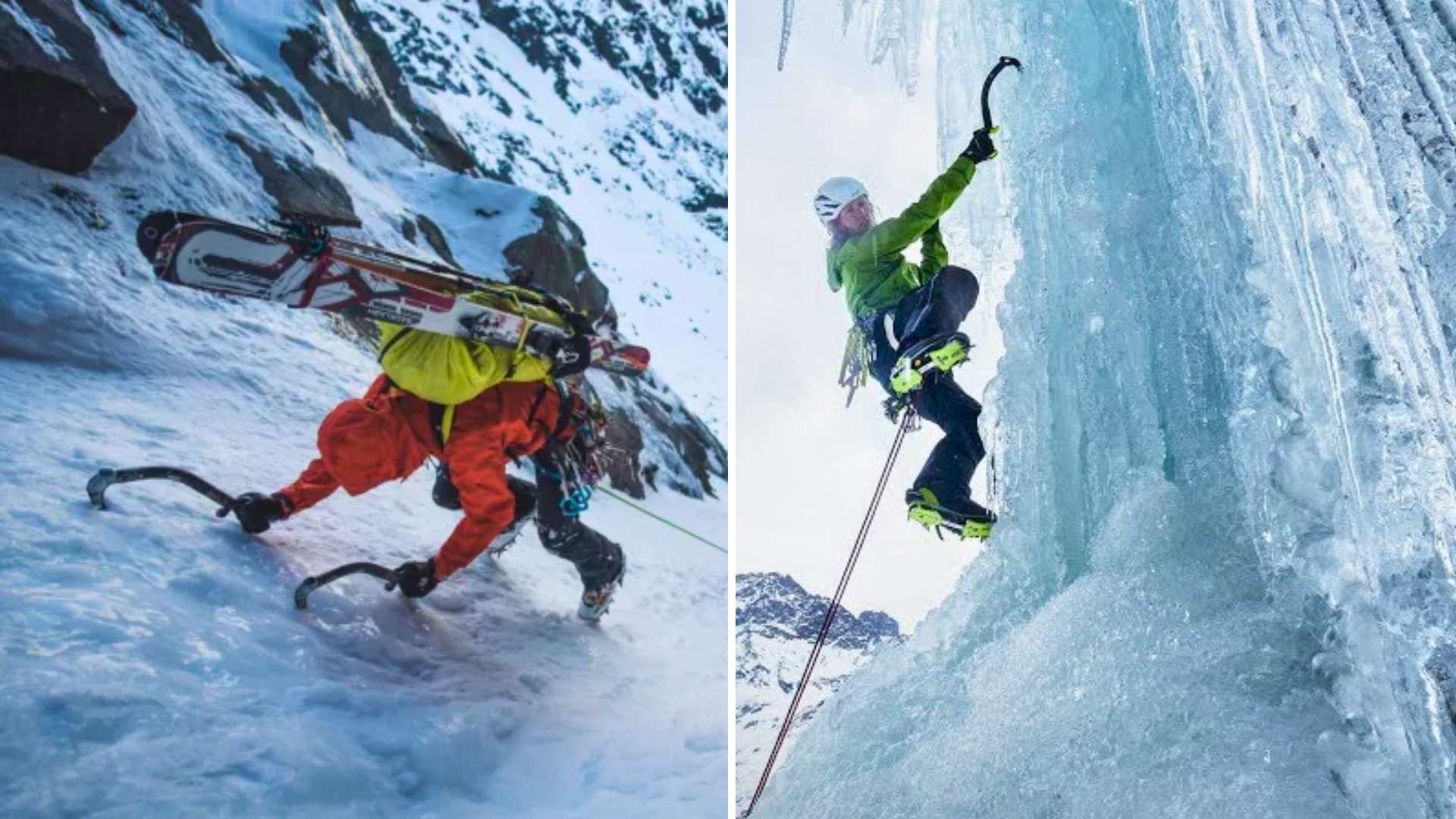
Neither axe is built for technical ice climbing or steep mixed terrain. If that’s your goal, look at a modular tool from the full Petzl ice axe lineup like the Sum’Tec instead, and if you’re deciding between B-rated and T-rated tools in general, our guide on T-rated vs B-rated ice axes breaks down what those ratings actually mean for your climbing plans.
FAQs
Among certified production axes, the CAMP Corsa is generally considered the lightest thanks to its all-aluminum head and shaft. Within Petzl’s own lineup, the Ride is the lightest option available. The Glacier and Raven are not built to compete on raw weight since both use a steel head for stronger anchoring, which is why the Glacier is considered lightweight for a steel-pick axe rather than an ultralight axe overall.
Yes. The Raven is widely regarded as one of the best value axes on the market and is a common training or rental axe on guided routes. It’s comfortable, durable, and reliable for moderate snow climbs and basic glacier travel. Its main limitation is performance on steep or firm snow, where a sharper picked axe like the Petzl Glacier does better. If you want to see how it stacks up against its own lighter sibling, check our Black Diamond Raven vs Raven Pro comparison.
No. Both are classic walking axes meant for glacier travel and general mountaineering, not steep or technical ice. For that, you would need a dedicated technical ice tool, and it’s worth reading up on best technical ice tools for alpine ice before making that jump.
It’s optional but recommended for glacier travel and crevasse rescue scenarios, where dropping your axe could be a serious problem. For simple snow walking, some climbers skip the leash for a more natural swing.
Length depends on your height and how you plan to use the axe. A shorter axe suits technical use and steeper terrain, while a longer axe works better as a walking support on moderate slopes. If you’re deciding between axes for ski mountaineering specifically, our roundup of the best lightweight ice axes for ski mountaineering has more sizing guidance, and if you’re still unsure, it’s worth trying both in person or asking an instructor before buying.