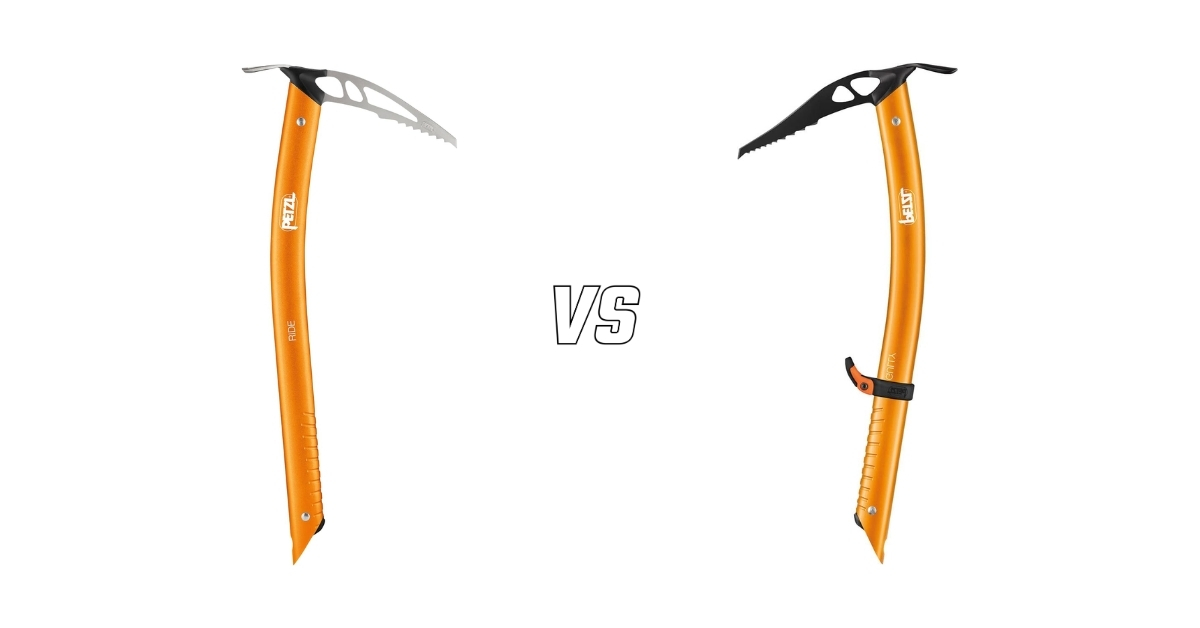
When selecting climbing equipment, ice axe ratings represent one of the most critical safety considerations for mountaineers and ice climbers. The International Union of Mountaineering Associations (UIAA) establishes two primary classifications: T-rated and B-rated ice axes. Understanding these designations directly impacts your safety on frozen terrain, whether you are tackling alpine climbs, waterfall ice, or mixed climbing routes.
This guide explains the differences between T-rated and B-rated ice axes, their specific applications, performance characteristics, and how to select the best tool for your climbing objectives.
What Are T-Rated Ice Axes?

Definition and Purpose
T-rated ice axes are specifically designed for traditional mountaineering and alpine ice climbing. The “T” stands for “traditional” or “technical,” and these axes meet rigorous UIAA standards for traditional climbing applications. T-rated axes are optimized for general ice climbing, snow and ice mixed terrain, and classic alpine expeditions.
T-rated ice axes feature a curved, ergonomic shaft design that allows for efficient climbing technique and comfortable hand positioning. The pick geometry is engineered for consistent penetration and security on moderate to steep ice angles.
Key Characteristics of T-Rated Ice Axes
- Curved shaft design for improved ergonomics and climbing efficiency
- Moderate pick angle suitable for 60-85 degree ice slopes
- Adze geometry optimized for cutting and self-arrest capabilities
- Meets UIAA T rating standards for dynamic impact and durability
- Ideal weight range of 500-700 grams for balanced control
- Better for longer alpine climbs requiring sustained climbing
What Are B-Rated Ice Axes?

Definition and Purpose
B-rated ice axes are engineered specifically for steep water ice climbing and mixed climbing on overhanging terrain. The “B” designation represents “basic”, “banana” or “bent,” referring to the markedly curved shaft design. B-rated axes are built to withstand the extreme forces and dynamic loadings encountered on 80-90+ degree ice slopes and demanding mixed climbing.
B-rated ice axes feature a significantly more aggressive pick geometry and increased curvature compared to T-rated axes. These tools are engineered for maximum efficiency when climbing near-vertical ice formations and for executing precise placements on overhanging terrain.
Key Characteristics of B-Rated Ice Axes
- Pronounced “banana” shaft curve for steep ice climbing
- Aggressive pick angle optimized for 80-90+ degree ice
- Specialized pick geometry designed for waterfall ice ascents
- Enhanced dynamic impact resistance per UIAA B rating standards
- Typically lightweight at 450-600 grams for rapid climbing
- Superior for short, intense climbing routes requiring power
T-Rated vs. B-Rated Ice Axes: Direct Comparison
| Feature | T-Rated Ice Axe | B-Rated Ice Axe |
| Shaft Curve | Moderate curve | Aggressive “banana” curve |
| Ice Angle | 60-85 degrees | 80-90+ degrees |
| Best Use | Alpine ice, mixed terrain | Waterfall ice, steep climbing |
| Weight | 500-700 grams | 450-600 grams |
| Climbing Style | Endurance-focused climbs | Power climbing, short routes |
Understanding UIAA Ice Axe Rating Standards
The Union Internationale des Associations d’Alpinisme (UIAA) establishes rigorous safety standards for climbing equipment, including ice axes. Both T-rated and B-rated axes must pass extensive testing protocols to ensure performance, durability, and impact resistance.
Testing Requirements
Ice axes undergo dynamic impact testing where the tool must withstand repeated strikes at full force without cracking, breaking, or deforming dangerously. The UIAA testing includes:
- Dynamic strike testing at high velocity and impact force
- Tensile strength evaluation of all structural components
- Adze and pick durability assessment under load
- Shaft integrity testing for fatigue resistance
Choosing Between T-Rated and B-Rated Ice Axes
Select T-Rated Axes If:
- You are climbing mixed alpine terrain or moderate snow and ice slopes
- Your primary activity involves longer alpine expeditions and peak ascents
- You prioritize comfort and efficiency over extreme steepness
- You are a recreational ice climber tackling moderate ice climbs
- You need reliable self-arrest capability on typical ice angles
Select B-Rated Axes If:
- You regularly climb waterfall ice or near-vertical ice formations
- Your climbing focuses on overhanging mixed terrain and steep ice
- You seek maximum performance on 80+ degree ice routes
- You are an advanced or expert-level ice climber
- Weight savings is a priority for demanding technical climbing
Safety Considerations When Selecting Ice Axes
Safety should always be the primary consideration when purchasing climbing equipment. Understanding the appropriate tool for your climbing level and objectives directly impacts your safety and performance.
Matching Equipment to Skill Level
Beginner climbers should start with T-rated axes, as their moderate design is more forgiving on learning climbs and develops proper technique. Advancing to B-rated axes before achieving the required technical skill level significantly increases accident risk and may result in inefficient climbing that causes rapid fatigue.
Terrain Appropriateness
Using T-rated axes on steep waterfall ice may compromise security due to suboptimal pick geometry on overhanging angles. Conversely, B-rated axes on moderate alpine terrain may feel overly aggressive and create technique inefficiencies. Always match your ice axe rating to the typical ice angles you encounter.
Proper Ice Axe Maintenance for Safety
Regardless of rating, proper maintenance extends tool life and ensures consistent safety performance. After each climbing season, inspect your ice axes for micro-fractures, dulled picks, or bent shafts.
- Clean the shaft and head thoroughly after use
- Sharpen picks using appropriate sharpening tools
- Inspect for cracks or structural damage before each climb
- Verify head attachment and shaft integrity regularly
Making the Right Choice
Selecting between T-rated and B-rated ice axes requires understanding your climbing objectives, skill level, and the specific ice conditions you encounter. T-rated axes excel at versatile alpine climbing, offering comfort and reliability across moderate terrain. B-rated axes deliver the performance needed for steep waterfall ice and extreme mixed climbing.
Invest time in researching specific models that meet UIAA standards and fit your climbing profile. Consult with experienced climbers, visit specialty climbing retailers, and test equipment when possible. The right ice axe transforms your climbing experience, enhances safety, and allows you to focus on the adventure rather than worrying about equipment performance.
Whether you choose T-rated or B-rated ice axes, prioritize quality construction, proper fit, and appropriate application to your climbing pursuits. Your safety and success on frozen terrain depend on this crucial equipment decision.